Pet Portrait Cross Stitch Pattern Maker: Turn a Pet Photo Into a Chart
Turn a photo of your dog, cat, or any pet into an editable cross stitch chart with real floss matches, a color legend, and stitch counts.
- Start from your own pet photo
- Pick a stitchable number of colors
- Fix eyes and whiskers stitch by stitch
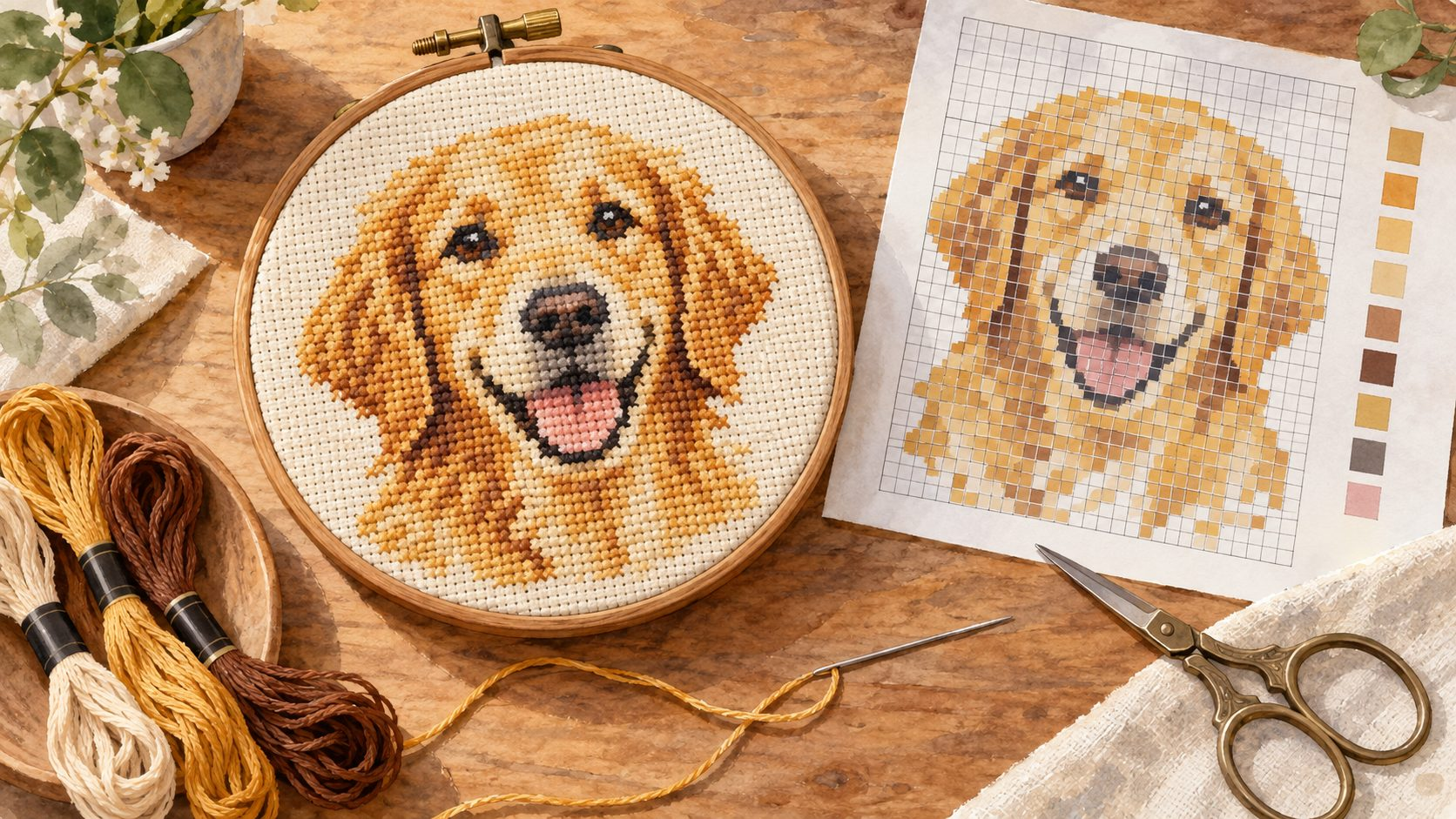
01
Start from your own pet photo
Built for real cross stitch projects, from first upload through a clean chart, thread list, and printable plan.
02
Pick a stitchable number of colors
Built for real cross stitch projects, from first upload through a clean chart, thread list, and printable plan.
03
Fix eyes and whiskers stitch by stitch
Built for real cross stitch projects, from first upload through a clean chart, thread list, and printable plan.
From image to stitchable pattern
Step 1
Upload or start blank
Bring in a photo or open a blank grid for an original design.
Step 2
Set size and colors
Choose stitch dimensions, canvas count, and a practical color palette.
Step 3
Edit and export
Refine individual cells, then export the chart, legend, and counts.
Made for decisions that matter at the canvas
Choose finished dimensions and mesh count before you commit. Threaded calculates exact stitch counts, reduces noisy colors, matches against real thread libraries, and keeps the chart editable. Free includes one project with DMC or Anchor matching. Pro is $15 monthly or $120 annually for unlimited projects, all 49 thread libraries, and print-ready PDF export.
Use the grid editor to draw, fill, select, move, replace colors, add rasterized text, and clean isolated stitches. Your export includes a symbol chart, legend, and materials counts that can be used at the needlework shop.
Questions about cross stitch software
How do I turn a pet photo into a cross stitch pattern?
Upload the photo to Threaded, choose the stitch dimensions and fabric count, and pick how many colors to use. Threaded converts it into a gridded chart matched to real floss, and you can edit it stitch by stitch before you export.
What kind of pet photo works best?
A sharp, well-lit photo where the face fills most of the frame works best. A plain, uncluttered background and clearly visible eyes give the cleanest chart. Crop in tight before you convert so the stitches go to the face rather than the background.
How many colors should a pet portrait use?
Fewer colors make a calmer chart and fewer thread changes, and more colors keep soft fur shading. You choose the palette size when you convert, so you can try a few counts and keep the one that reads as your pet.
Can I fix the eyes and nose after converting?
Yes. Every stitch stays editable on the grid. You can draw, fill, replace one color with another, and clean up isolated stitches, which is how most people sharpen the eyes, nose, and whiskers.
Is the pet portrait pattern maker free?
Threaded is free to start: the free plan includes the full editor, one saved design up to 100 x 100 stitches, and DMC and Anchor color matching. Pro costs $15 a month or $120 a year and adds unlimited designs, all 49 thread libraries, larger grids, and PDF and image export.
Learn more in the Threaded guides, or compare our cross stitch software and needlepoint software.
Ask AI about Threaded:
Start your next cross stitch pattern tonight
Free to start. One saved design, DMC and Anchor matching, and the full editor in your browser.