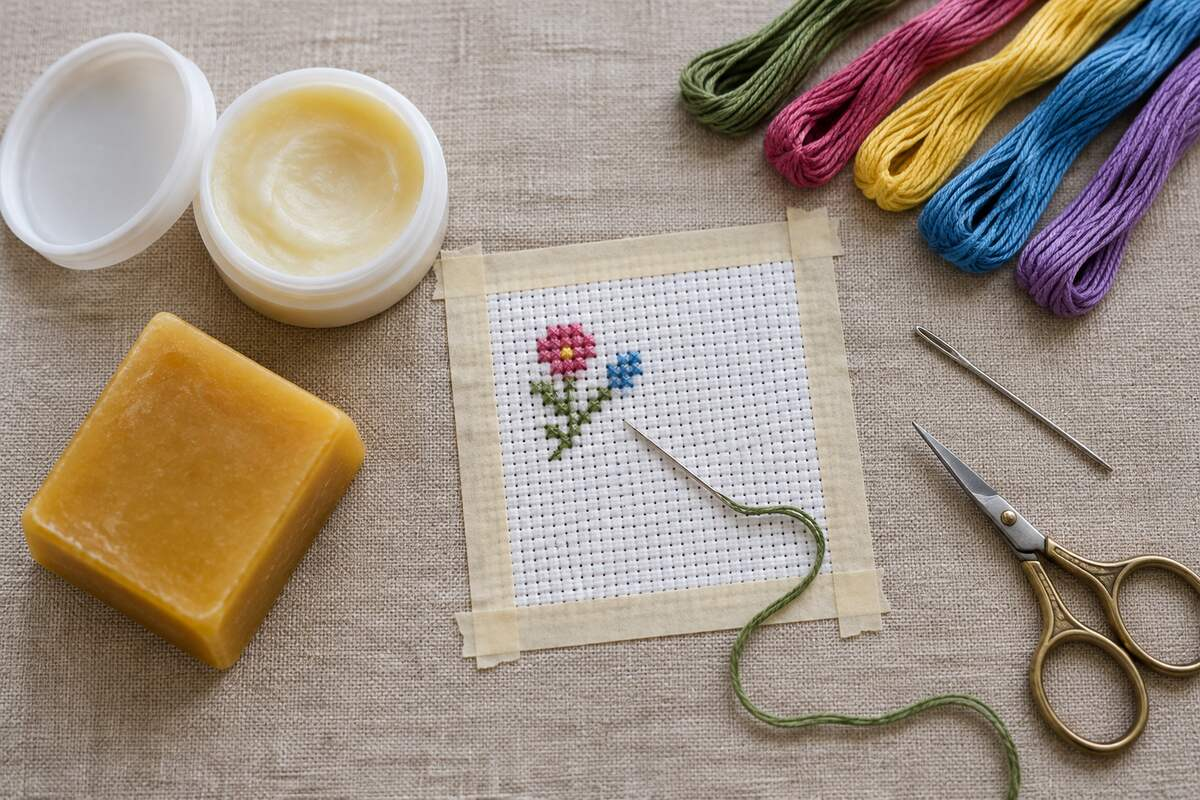
Thread conditioner is a coating, either 100 percent beeswax or a synthetic silicone-based product like Thread Magic, that you draw your floss through before stitching. It can make thread glide, reduce tangling and fraying, and tame difficult metallics. It can also dull shine, darken colours slightly and hold onto dirt, so most stitchers treat it as a tool for problem threads rather than an every-skein habit. Last updated November 6, 2026.
Start here: You do not need conditioner for ordinary DMC-style stranded cotton on Aida. Reach for it when a thread fights you: metallic and light effects threads, rough kit floss, rayon or satin threads, or colours that knot no matter what you do. Draw the thread across the conditioner once, pull it between finger and thumb to smooth it, and test on a spare length first if the piece is an heirloom or the thread is white.
What thread conditioner is
Catkin and Lillie defines it simply: a product you use to coat embroidery threads to make them potentially easier to stitch with, and that "potentially" matters, because the benefit depends on the thread and the stitcher. The Spruce Crafts describes the coating as a protective layer that guards against soil and moisture, releases static electricity, and reduces thread drag, the wear caused by repeatedly pulling a thread through fabric.
Lord Libidan draws a useful distinction that most guides blur: waxing and conditioning are two different jobs. Wax makes the thread stick together and pass through fabric more easily; conditioner stops the thread fraying. The much-loved Thread Heaven, discontinued to widespread protest, happened to do both, which is why stitchers still hunt for a replacement.
Beeswax vs synthetic
There are two families. The first is 100 percent beeswax, sold as small blocks and novelty shapes. Catkin and Lillie stresses looking for pure beeswax with no other ingredients. Lord Libidan agrees and goes further: choose white beeswax, because it is a "bleeding" wax that penetrates the thread and conditions as well as coats, and avoid DIY or unfiltered natural beeswax, which can carry colourants and impurities you do not want near your work. His safety note is worth repeating: beeswax is extremely flammable, so iron cautiously or wash the piece first.
The second family is synthetic silicone-based products. Thread Heaven was the classic; Thread Magic is widely treated as its successor, and Benzie Design, a felt and craft supplies seller, confirms its silicone base acts as a lubricant that lets thread slide while reducing the friction that causes knots. The Spruce Crafts classifies Thread Heaven as a synthetic silastic polymer with the consistency of beeswax but not wax- or petroleum-based. In Lord Libidan's testing, Thread Magic conditioned and waxed without building up over time, and he rated it above the original.
There are also hybrids like Sew Fine Thread Gloss, which Benzie Design describes as natural beeswax blended with fragrance oils, positioned between a plain wax block and a synthetic conditioner.
What it actually does
The honest benefits for cross stitch are specific. Conditioner can help thread glide through fabric, and it can reduce tangling, knotting and fraying as the strand rubs against Aida. Hannah Hand Makes conditions selectively, mainly her light effects threads, and recommends it strongly for anyone struggling with metallics. The Spruce Crafts adds rayon, satin-style threads and DMC's neon and glow-in-the-dark Light Effects to the list of threads it tames. Benzie Design notes a conditioned thread can also be easier to thread through a needle.
The strengthening benefit advertised for hand sewing matters less here. Catkin and Lillie points out that cross stitch is mostly decorative, so a stronger thread is rarely the point; if the piece will be used and washed, the case is a little stronger, but still not compelling on its own. Our metallic floss guide covers the threads where conditioner earns its keep most often.
Downsides and risks
Every coating changes the thread. Catkin and Lillie's stitched comparison found beeswax gave a more matte finish and slightly thicker feel, and a number of sources report that beeswax can darken thread slightly on application, possibly further over time, and take away some shine and springiness. Benzie Design agrees the wax coating can dull floss shine, which is why it steers decorative embroidery toward Thread Magic, whose light coating does not leave a dulling residue.
Coated thread also grabs dirt. Catkin and Lillie warns beeswax in particular makes threads more likely to catch grime that may not wash out, a real concern for light colours. The Spruce Crafts cautions that conditioner on white thread can pick up dust and give the thread a greyish cast, so use it carefully on whitework.
The long-term question is unsettled. Catkin and Lillie acknowledges the worry that a coating could affect thread over decades and notes there is little hard evidence either way; the general consensus it reports is that silicone-based synthetics are the bigger question mark, pure beeswax the safer bet. If the piece is a future heirloom and longevity is the priority, skipping conditioner is the conservative choice.
When to use it
The clearest case is metallics and other difficult specialty threads: Hannah Hand Makes, The Spruce Crafts, Benzie Design and Lord Libidan all put these first, and Lord Libidan notes metallic threads are much easier to use with conditioner. Beyond that, Catkin and Lillie's practical advice is to let the thread tell you: some brands and even some individual colours within a brand feel rougher, plausibly because of the dyes, and those are the lengths worth conditioning. If you are getting constant knots with a particular thread, a single pass of conditioner is a cheap experiment.
The everyday case is weak. Catkin and Lillie's verdict is that embroidery threads do not really need conditioning, and time spent waxing every skein is time not spent stitching. Hannah Hand Makes does not condition her regular floss either, and reports one outright failure: conditioning satin thread made it drag and fray worse, not better.
Alternatives
The simplest alternative is water: run the thread through a damp sponge to smooth it. Catkin and Lillie has not needed it but reports good results from other stitchers; Lord Libidan tried it and rated it "in a pinch" effective, with two cautions: keep it away from specialty threads containing metal, which can rust, and use a natural or pH-neutral sponge.
Lord Libidan's testing produced two more surprises: a plain white unscented candle waxes thread well (coating without conditioning), while pure silicone ear plugs work but can never be washed out, sealing in any dust or sweat. He also warns against tumble dryer sheets and liquid silicone. Catkin and Lillie raises dryer sheets too, as a static reducer some stitchers swear by, but shares the concern about unknown chemicals on thread over time.
Where sources disagree
Does it make stitching easier? The Spruce Crafts and Benzie Design say conditioned thread glides and resists tangles. Catkin and Lillie's side-by-side samples felt no easier with Thread Heaven and slightly harder with beeswax, which thickened the thread. Both can be true: the gain shows up on rough or metallic threads, not on smooth quality cotton.
Beeswax or synthetic? Lord Libidan rates Thread Magic first and white beeswax a close second. Catkin and Lillie reports the consensus that synthetics are the bigger longevity question mark. Benzie Design, which sells both, recommends synthetic for decorative work where shine matters and beeswax for hand sewing strength. Pick by what you are protecting: the look, or the thread.
Protective claims. The Spruce Crafts lists protection against UV, mould and mildew among the benefits. Lord Libidan explicitly discounts such claims, saying he has yet to see the science. Treat the proven effects, glide and tangle control, as the real ones.
Every thread or some threads? The Spruce Crafts suggests you might use conditioner every time you stitch; Hannah Hand Makes and Catkin and Lillie condition selectively or barely at all. The selective camp has the better-evidenced position for cross stitch specifically.
FAQ
What is the best thread conditioner for cross stitch? In Lord Libidan's testing, Thread Magic came first and white beeswax second. Benzie Design recommends Thread Magic where you want to keep the floss shiny and beeswax where strength matters more than looks.
Is Thread Heaven still available? No, it was discontinued. Thread Magic is the widely accepted successor, and Catkin and Lillie notes the switch caused real outcry among stitchers.
How do you apply thread conditioner? Lay the thread across the conditioner, hold it with a finger or thumb, pull the thread through from end to end, then smooth it between finger and thumb. Repeat for a heavier coat. Benzie Design demonstrates the same method for all three conditioner types.
Should I condition metallic thread? It is the strongest use case. Every source that discusses metallics recommends conditioning them; our metallic floss guide covers the rest of the toolkit.
Will conditioner ruin my threads over time?There is little hard evidence either way. The reported consensus is that pure beeswax is the safer option and silicone synthetics the bigger unknown. For an heirloom piece, the cautious choice is to skip conditioner entirely.
Can I use conditioner on white thread? With caution. The Spruce Crafts warns conditioner can grab dust and leave a greyish cast on white threads, and beeswax can darken colours slightly. Test on a spare length first.
Sources
- Catkin and Lillie - Should You Use Thread Conditioner for Cross Stitch? (a cross stitch designer; types, stitched comparisons, downsides, and selective-use verdict)
- The Spruce Crafts - How to Use Thread Heaven and Other Thread Conditioners (a craft reference site; how conditioners work, application, and whitework caution)
- Benzie Design - Thread Conditioners (a craft supplies seller; Thread Magic, thread gloss and beeswax compared, with use directions)
- Hannah Hand Makes - 10 Tools to Make Cross Stitch Easier (a cross stitch teacher; selective conditioning, light effects threads, and the satin thread failure)
- Lord Libidan - What's the Best Alternative for Thread Heaven? (a cross stitch designer's test blog; wax vs conditioner, Thread Magic and beeswax rankings, and alternatives tested)