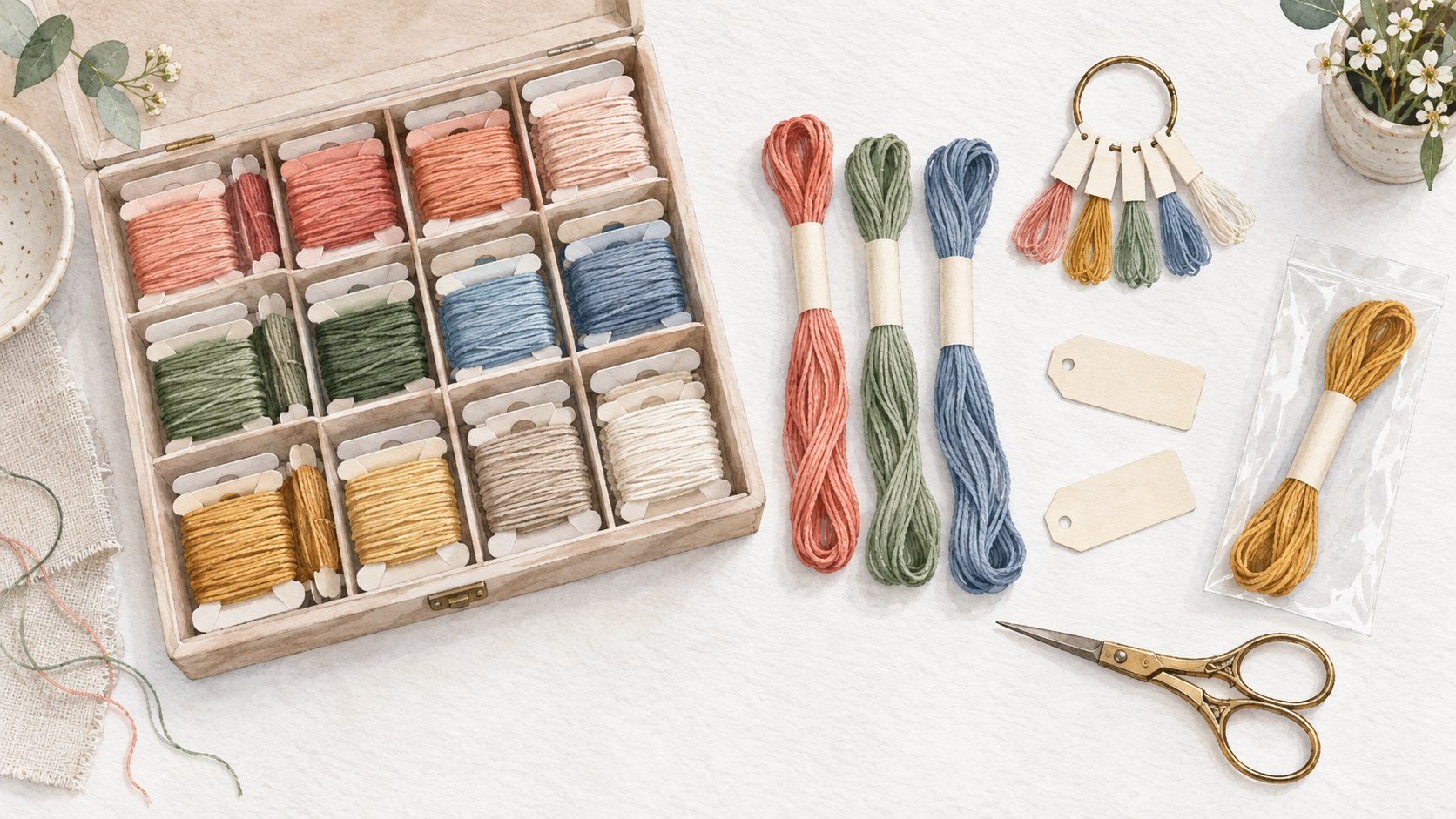
The best embroidery floss storage is the one you can put back correctly after stitching. Bobbins are compact, numbered bags avoid rewinding, and thread drops keep prepared lengths easy to reach. You do not need to move every skein into the same system. Start by preserving the brand and color number, give each color a home, and keep the thread for your current project separate from the main collection.
If your collection is small or tangled, put each known color in its own labeled bag first. Keep the original paper band with it. Choose bobbins or drops later if they solve a real problem. Do not spend a weekend rewinding a collection before you know whether you like using the new system.
Choose storage for how you stitch
A tidy rainbow of bobbins looks appealing, but it is only one option. Cross stitchers following numbered charts often need quick code lookup. Freehand embroiderers may want to see related shades together. Someone working on the sofa needs a small project kit more than a wall of drawers. Decide which problem you are fixing before buying organizers.
| System | Useful when | Tradeoff |
|---|---|---|
| Bobbins in divided boxes | You want compact, visible storage and easy numerical order | Winding takes time; thread can hold bends from the bobbin edges |
| Labeled bags | You want intact skeins, duplicates, and leftovers together | Bags take more space and loose strands still need tidying inside |
| Thread drops or cards on rings | You use prepared lengths and want quick project access | Hanging lengths can tangle if packed carelessly |
| Binder sleeves or skein holders | You want to keep skeins mostly intact and browse a range | Check fit, labels, and the space a full binder needs |
| Shallow drawers | You own several thread lines and need to see them separately | Furniture and dividers need more room than a starter collection |
Try one small batch before converting everything. Put ten familiar colors in the proposed system, stitch with them, and return them afterward. Can you find a number quickly? Can the organizer hold an extra skein of your most-used shade? Can you store a partly used length without creating a tangle? Those answers matter more than how the box looks in a photograph.
Keep the brand, line, and number together
A thread number is not a universal identity. DMC 310 and a code from another brand belong to different numbering systems. Write the brand and thread line as well as the color code, especially if your collection mixes stranded cotton, pearl cotton, silk, or hand-dyed floss. Keep the original band or packaging when possible.
Use a readable label on the organizer, not on the thread itself. DMC sells number stickers for its cardboard and plastic bobbins, but handwritten labels work too. Test your marker or adhesive on one bobbin before labeling the whole set. Place the number where it remains visible after winding and while the bobbin stands in its box.
For specialty thread, retain other useful information from the packaging: fiber, thickness, color name, and any dye-lot code. Do not combine separate lots into an anonymous bundle. Two skeins with the same named shade can still deserve separate labels, particularly when the project depends on a consistent hand-dyed color.
What about unlabelled floss?
Do not assign an exact code by eyeballing it under room light. Similar shades can be close enough to fool you and still look different when stitched side by side. Keep unknown thread in a separate group labeled as unknown. Use it for practice or a project where exact replacement is not important. Comparing it with a physical thread sample can narrow the choice, but is not proof of its brand or original code.
Bobbins: compact storage without winding too tightly
Plastic and cardboard bobbins both hold thread and carry a label. Use a size that fits your box. Wind evenly around the center rather than piling all the thread into one narrow band. Secure the loose end in the bobbin's notch without pulling it so tightly that the thread is under constant tension.
Keep the skein band until the new label is finished. Work on one color at a time so an interrupted winding session does not leave three similar shades with detached labels. If you own duplicates, either store extra unopened skeins separately with an index or keep them in a labeled bag linked to the working bobbin. Do not hide a backup in an unrelated compartment.
Thread can take temporary bends around flat bobbin edges. That does not automatically make it unusable. If you dislike the bends while stitching, try storing intact skeins or prepared lengths on drops instead. There is no need to rewind a system you already use comfortably just because another stitcher prefers something else.
Divided boxes keep bobbins upright and stop colors sliding into a heap. Leave some space for fingers and new purchases. Numbered dividers or range labels make several boxes easier to search. A small box for a current project can coexist with larger main storage, provided you record which colors have been borrowed.
Bags, drops, and intact skeins
Bags: the low-rewinding option
Put a skein, its band, and matching usable leftovers in a labeled bag. A small card inside can help it stand upright in a box and give you a second readable label. PDXstitch's worked storage tutorial uses this approach, keeping whole skeins intact and organizing partly used thread separately inside the bag.
Keep different colors in different bags, even when they look nearly identical. Tidy loose lengths before putting them away. Bags protect thread from stray fibers and make duplicates easy to keep together, but they are not a cure for damp thread or a ball of knots. Seal only dry, clean material.
Drops: ready lengths for an active project
A drop is a small labeled card or tag with a hole holding lengths of floss. Put drops on a ring in chart order or by color code. Keep each color's lengths together and avoid folding all the hanging strands into a tight mixed bundle. When traveling, protect the ring in a project bag so the ends do not catch on needles or zippers.
Decide whether you are storing full six-strand lengths or separated working strands, and label that distinction if both are present. A leftover bundle can look full while containing only one or two strands. Keep unused full lengths and partly used strands on separate labeled holes or small organizers rather than merging them without a note.
Whole skeins and binders
You do not have to unwind a skein at all. Keep it in its band, in a labeled sleeve, or in a drawer with a divider. Mary Corbet describes a binder system whose individual slots are labeled, making an empty slot a visible inventory cue. Before buying sleeves, check that the current product fits your thread packaging and the binder you intend to use.
Keep specialty threads in their original format unless you have a reason to change it. A spool, hank, or card can preserve information and make handling easier. Do not automatically cut variegated thread into short lengths: the color sequence may be part of the effect you want in a project.
Sort by number or by color?
Numerical order is practical when a chart tells you the codes to pull. Sort within each brand and line, not across unrelated manufacturers. Keep named codes such as white shades readable rather than forcing them into a numeric sequence that confuses you. A simple divider label can state where they live.
Color-family order is useful when choosing your own palette. Keep every code label visible so attractive arrangement does not erase the information needed to replace a shade. If your system is color-ordered, an inventory can include a location field such as "blue box, row 2." You can then find a chart code without hunting through every family.
A hybrid works well: main stock by number, active design palette on a ring, and a physical swatch card for choosing shades. You do not need a full commercial thread range for this. Organize what you actually own and add to the record as it grows.
Keep current projects separate, then return the leftovers
Pull a project's colors into a small kit with its chart and a thread list. If you borrow a bobbin from the main collection, leave a note or placeholder at its home. This avoids buying the same shade again because an empty space looks like missing stock.
Keep short usable lengths with their identified color. There is no universal minimum worth saving: keep lengths you can actually stitch with and discard bits too short for your method. Avoid an unlabelled jar of scraps unless it is deliberately for practice. It is easy to spend more time sorting tiny remnants than they are worth.
When a project ends, remove needles from loose thread, return identified leftovers to their home, and update the inventory. Check whether a project-only code should become a permanent stock entry. A five-minute reset protects the usefulness of the whole system.
Threaded's cross stitch pattern maker matches charts to real thread codes. Use the project's legend to check the colors already in your storage before buying more. Threaded does not automatically know which skeins are in your drawer. Our floss calculation guide helps with amounts, and the Stitch Fiddle comparison covers chart-editor choices rather than physical storage.
Make a small inventory you will keep current
A notebook or spreadsheet is enough. Record brand, line, code, approximate amount, storage location, and whether a color is allocated to a project. Add a dye-lot note where useful. Do not pretend a partly used bobbin is a precise meter count unless you measured it.
| Field | Example entry | Why it helps |
|---|---|---|
| Identity | DMC stranded cotton, 310 | Avoids mixing numbering systems |
| Amount | One unopened skein plus a partial bobbin | Reduces duplicate buying without false precision |
| Location | Box 1; backup in bag drawer | Lets you find both working and spare thread |
| Project | Borrowed for flower sampler | Explains an empty slot |
Update the record when thread enters the collection, when you finish a skein, and when you return a project kit. Take the list to the shop or keep a copy on your phone. If maintaining every partial amount becomes annoying, use simpler statuses such as "have," "low," and "need." A coarse record used consistently is better than an exact-looking record abandoned after a week.
Protect thread while storing it
Keep storage clean, dry, and away from prolonged direct sunlight, heat, and damp areas. Make sure thread is fully dry after any testing or washing before closing it in a bag. Avoid storing it against rough edges, rusty metal, or adhesive that can transfer onto the fibers.
For long-term storage of valuable silk or a large collection, consider suitable archival dividers and liners rather than improvised acidic card or unfinished wood in direct contact with thread. Mary Corbet's drawer setup discusses that distinction. It does not mean every ordinary plastic bobbin box is unsafe; choose materials appropriate to the length of storage and value of the thread.
Inspect the collection occasionally. Look for damaged labels, moisture, insects, or loose scraps that migrated into the wrong section. Keep scissors and uncovered needles separately enough that they cannot nick hanging floss. A beautiful storage wall is less useful than a closed box if the wall exposes thread to light and dust.
Questions
Are bobbins better than bags?
Bobbins are compact and visible; bags avoid rewinding and hold duplicates together. Choose by how you retrieve and return thread, not by appearance.
Should I sort DMC by number or color?
Number order helps when following charts; color order helps when designing palettes. Either works if labels remain visible and you can find a code reliably.
What should I do with unknown floss?
Keep it separate and label it unknown. Do not invent an exact brand or number from a visual guess. Use it where exact matching is unimportant.
Can I put several brands in one box?
Yes, but label brand and line clearly and use separate sections. A number alone does not identify the thread across brands.
Do I need an app?
No. A list, notebook, or spreadsheet can track identity, approximate amount, and location. The important part is updating it when supplies change.
Sources
- DMC number labels: identifying cardboard and plastic bobbins.
- DMC bobbin storage box: divided-box storage.
- Textile Indie's organization methods: choosing by time, space, and stitching habits.
- PDXstitch's labeled-bag tutorial: intact skeins, leftovers, and inventory.
- Lost in Cross Stitch's storage guide: cards, bags, bobbins, and tracking.
- Mary Corbet's thread storage: separated thread ranges and long-term drawer storage.
- Needle 'n Thread's binder system: labeled slots and visible inventory.