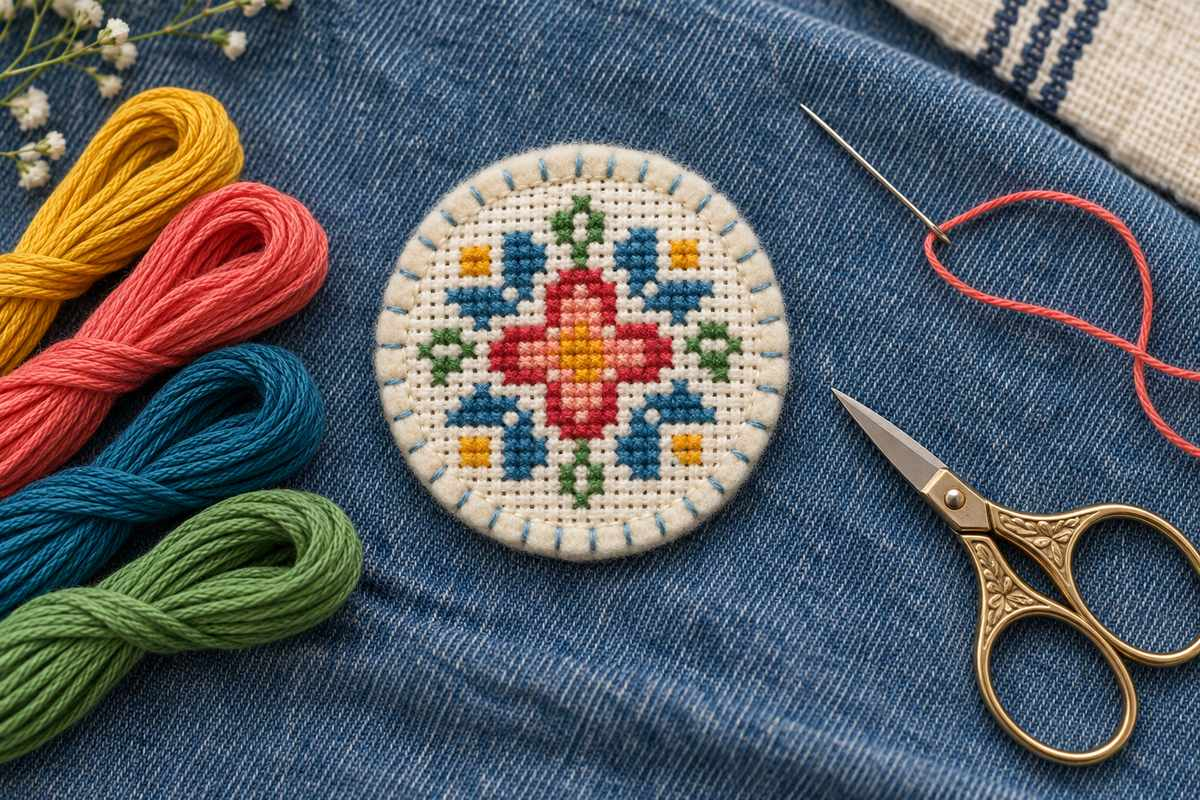
A cross stitch patch turns a small finished motif into something you can sew onto a jacket, bag or jeans. The basic method needs only felt, floss and a blanket stitched edge; iron-on versions swap sewing for fusible web. This guide covers materials, the step by step finish, and the points where tutorials disagree. Last updated November 15, 2026.
Start here: Decide sew-on or iron-on before you pick materials. Craft felt is fine for a sew-on patch but acrylic felt can melt under an iron, so iron-on patches need fusible interfacing or HeatnBond instead.
What a cross stitch patch is
A patch is a small stitched piece with a finished edge and a backing, made to be attached to clothing or a bag. It suits small, bold motifs: a flower, a word, an animal, thirty to sixty stitches across. If you want to design your own motif, our graph paper guide covers sketching one square by square, and the alphabet guide handles words and initials.
Patches are also a practical finish for leftover test pieces and tiny patterns that would be lost in a frame. Floss Field's small finishes guide covers the same family of quick finishes: pins, patches and other small mounts.
Materials and preparation
Our Daily Craft's tutorial keeps the supply list short: your stitched design, a piece of felt or other backing fabric, embroidery floss, a needle and scissors. Felt is the easy backing because it does not fray when cut; an old T-shirt or any scrap fabric works if you accept some fraying, and pinking shears slow it down.
Craftow's eleven step version adds preparation details: start with clean, undamaged fabric, pin the piece flat on a foam board while you work, and keep iron-on backing or fusible web on hand if you want a no-sew attachment. Both tutorials agree on one layout rule from Our Daily Craft: cut the fabric leaving about five unworked squares of border around the stitching, so the edge stitching has room and the design stays centered.
Finishing the patch step by step
The Our Daily Craft method is the core workflow. Cut your backing felt to the same size as the trimmed cross stitch fabric. Choose a coordinating or contrasting floss for the edge; the back will not show, so matching only matters at the rim. Blanket stitch around the whole edge, sewing the backing to the stitched fabric and working into every hole around the perimeter for a solid border.
Then attach. For a sew-on patch, stitch it directly onto jeans, a jacket or a bag, or sew on a pin backing to wear it as a brooch. For an iron-on, apply fusible interfacing or HeatnBond to the back, following the product instructions: adhesive side down, press with a hot iron, peel the paper, position on the garment and press again. Craftow suggests trimming excess backing to about a quarter inch and reinforcing the rim with a line of fabric glue for durability.
Clover, a needlecraft notions maker, publishes a patch tutorial with a free pattern, which is a low risk way to try the finish before committing a larger piece. Floss Field's small finishes guide puts patches in the same family as pins and other quick mounts, so the skills transfer if you want to turn the same motif into a pin or magnet instead.
Durability and washing
Where the patch will live decides the attachment. A sew-on patch worked through every hole with blanket stitch is the durable option for jeans and bags that get washed and worn. Iron-on adhesive is faster but can lift at the corners after repeated washing, so many stitchers iron first for placement and add a few tacking stitches at the corners for insurance.
Keep the stitched design itself washable too: DMC stranded cotton is colorfast, but backing felt can shrink or pill, and fabric glue needs to be fully dry before the first wash. A patch on a rarely washed backpack can be more delicate than one on a favorite pair of jeans.
Where sources disagree
Backing is the biggest split. Our Daily Craft likes felt for sew-on patches but warns that big-box craft felt is acrylic and can melt under an iron, so it should not be used for iron-ons. Sirious Stitches goes further and makes iron-on patches with no fabric backing at all, just fusible web on the stitching itself, though Our Daily Craft notes it would still want the backing for thickness. If you iron, either skip the felt or use a cotton backing.
Edge treatment also varies. Our Daily Craft blanket stitches through every hole for a dense border. Craftow accepts a mix of trimming, pinking and fabric glue for edge control. The blanket stitch edge looks the most like a traditional purchased patch; glue and pinking are faster but less durable through washing.
FAQ
Will a cross stitch patch fray? Aida frays at cut edges, which is why the tutorials back the patch with felt or finish the rim with blanket stitch, pinking shears or glue. Do not skip the edge finish.
Can I make it an iron-on patch? Yes, with fusible interfacing or HeatnBond pressed onto the back. Do not use acrylic craft felt as the backing if you plan to iron, because it can melt.
How much border should I leave? Our Daily Craft leaves five unworked squares around the stitching before trimming. That gives the blanket stitch room and keeps the design centered.
What can I put a patch on? Jeans, jackets, tote bags and backpacks are the usual answers. Sew-on patches survive washing better than iron-on ones on frequently washed items.
Sources
Our Daily Craft, craft tutorial site: Make a cross stitch patch
Craftow, craft how-to site: How to make cross stitch patches
Sirious Stitches, stitcher blog: Making an iron-on patch out of a cross stitch
Floss Field, finishing guides: Pins, patches and small finishes
Clover Needlecraft, notions maker: Cross stitch patch with free pattern